
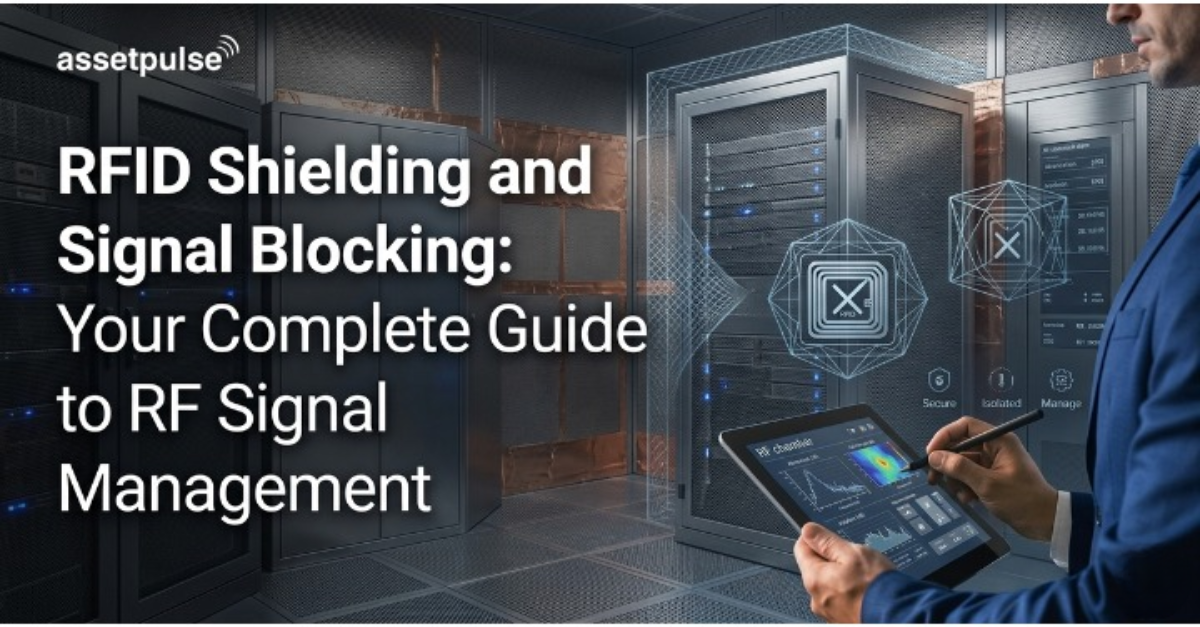

RFID shielding and signal blocking refer to techniques used to control, limit, or prevent RFID signals so that only the intended tags are read at the right place and time. By managing radio frequency signals, businesses can avoid unwanted reads, protect sensitive data, and create precise read zones for accurate and reliable RFID tracking.
In the world of RFID technology, controlling radio frequency signals is just as important as transmitting them. While businesses invest heavily in RFID systems to track inventory, manage assets, and streamline operations, they often overlook a critical aspect: knowing when and how to block those same signals. Whether you’re protecting sensitive information from unauthorized scans, creating precise read zones in a complex warehouse, or simply preventing one RFID reader from interfering with another, signal management can make or break your system’s effectiveness.
The challenge is real. A distribution center with multiple dock doors might find readers accidentally counting pallets stored in adjacent areas. A retail store with RFID-enabled fitting rooms could experience interference from nearby inventory zones. Security-conscious individuals worry about digital pickpockets scanning their passport or credit cards. The solution lies in understanding RFID shielding and implementing strategic signal blocking.
Struggling with RFID interference and false reads?
Discover RFID solutions that improve signal control and accuracy.
Talk to an ExpertUnderstanding RFID Shielding: The Basics
RFID shielding works by blocking or attenuating radio frequency signals, preventing RFID readers from detecting tags in specific areas. Think of it as creating an invisible barrier that stops RF waves in their tracks. This isn’t about defeating the technology—it’s about controlling it with precision.
The science behind shielding is straightforward. Radio frequency signals behave predictably when they encounter certain materials. Some materials reflect these waves like a mirror bounces light, while others absorb the energy entirely. By strategically placing these materials, you can create protected zones where RFID signals cannot penetrate.
RFID Shielding Materials: What Actually Works
Aluminum Foil and Metal Mesh
The simplest and most accessible shielding solution sits in most kitchen drawers. Even thin aluminum foil effectively blocks UHF RFID signals by reflecting radio waves before they reach tags. Metal mesh works similarly, provided the apertures (holes) in the mesh are smaller than the RF wavelength you’re blocking.
These materials excel in temporary applications or testing scenarios. Wrap an RFID-tagged item in aluminum foil, and it becomes invisible to readers. However, their practical limitations—fragility, appearance, and maintenance requirements—make them less suitable for permanent installations.
RFID-Blocking Fabrics
Specialized textiles incorporate metallic fibers or coatings to provide flexible, portable shielding. These fabrics appear in consumer products like passport holders, wallets, and laptop bags, addressing growing privacy concerns about unauthorized RFID scanning.
The advantage of these fabrics extends beyond privacy products. They offer portable protection that travels with your items while maintaining a professional appearance. For businesses, RFID-blocking bags can segregate tagged items during transport or storage without requiring permanent infrastructure.
Ferrite Materials
Unlike metals that reflect radio waves, ferrite materials absorb RF energy. This distinction matters significantly in certain applications. Ferrite sheets placed between RFID tags and metal surfaces reduce interference rather than creating additional reflection problems.
Manufacturers commonly incorporate ferrite materials into on-metal tag construction, enabling reliable performance even when tags attach directly to metal assets. For system designers, ferrite materials solve problems where reflection-based shielding would create new interference issues.
Faraday Cages
The gold standard of RF isolation, a Faraday cage is a complete enclosure made of conductive material. When properly constructed, it blocks all external electromagnetic fields—not just RFID signals but the entire RF spectrum.
Secure storage areas, testing environments, and locations requiring absolute RF isolation rely on Faraday cages. While they represent the most expensive shielding option, they provide guaranteed signal blocking. For high-security applications or precise testing scenarios, no alternative offers comparable protection.
Do you need better control over RFID signals?
Optimize RF signal management and eliminate costly errors.
Get Free ConsultationWhen Signal Blocking Becomes Essential
Privacy and Security Applications
Unauthorized RFID reading poses genuine security risks. Passports containing RFID chips, contactless payment cards, and access badges can potentially be scanned without physical contact. While the actual risk varies depending on the specific implementation and security features, RFID-blocking products provide peace of mind.
For organizations handling sensitive documents or high-value tagged items, preventing unauthorized scanning protects both assets and information. Strategic shielding ensures that only authorized readers can detect tagged items within your facility.
Creating Controlled Read Zones
Complex RFID deployments often involve multiple readers operating in close proximity. Without careful signal management, one reader might detect tags intended for a different zone, creating false reads and inventory inaccuracies.
Consider a warehouse with multiple receiving docks. Each dock door has an RFID reader to track incoming shipments. Without shielding between zones, the dock 1 reader might count pallets being unloaded at dock 2. Strategic placement of RF-blocking barriers creates clear boundaries, ensuring each reader monitors only its designated area.
Inventory Segregation Strategies
Distribution centers face a particular challenge: distinguishing between “active” inventory moving through the facility and “passive” inventory staged for future processing. A dock door reader should count only items actively shipping, not pallets stored nearby awaiting their turn.
Shielding solutions create invisible walls that separate these zones. Inventory remains in the same physical space, but RF barriers ensure readers detect only the items intended for processing. This precision prevents double-counting and maintains inventory accuracy.
Testing and Calibration Requirements
Developing and testing RFID systems requires isolation from external interference. RF-shielded enclosures create controlled environments where tags and readers can be tested without influence from other RFID systems, Wi-Fi networks, or external RF sources.
For system integrators and manufacturers, shielded testing environments ensure consistent, repeatable results. Variables like external interference no longer affect measurements, allowing accurate assessment of tag and reader performance.
Is your RFID system delivering accurate results?
Improve read accuracy with advanced shielding and signal blocking.
Book a Free DemoManaging RF Interference: Beyond Simple Shielding
Signal blocking addresses intentional isolation needs, but effective RFID deployments must also manage unintentional interference from various sources.
Wi-Fi and Bluetooth Coexistence
UHF RFID operates at 860-960 MHz depending on regional regulations, while Wi-Fi uses 2.4 GHz and 5 GHz bands. Despite occupying different frequency ranges, physical proximity to high-power Wi-Fi equipment can cause performance issues.
The solution is straightforward: maintain at least six feet of physical separation between RFID antennas and Wi-Fi access points. This spacing prevents most coexistence problems without requiring complex filtering or coordination.
Multiple RFID Reader Coordination
When multiple RFID readers operate nearby, their signals can overlap and interfere. Modern readers implement “listen before talk” protocols—they monitor for other readers before transmitting, reducing collision risks.
Dense reader deployments require additional coordination through frequency planning, time-division multiplexing, or reader synchronization. Each reader operates during assigned time slots or on specific frequencies, preventing simultaneous transmissions that would create interference.
Anti-Collision Protocols for Dense Tag Populations
When hundreds of tags enter a read zone simultaneously, they could all respond at once, creating a collision that prevents any tag from being read successfully. Gen 2 UHF RFID implements sophisticated anti-collision protocols that manage this scenario, allowing readers to inventory large tag populations efficiently.
However, even advanced protocols have limits. Thousands of tags in very tight spaces can overwhelm the system. Reader configuration—adjusting transmit power levels, session settings, and Q-values—optimizes anti-collision performance for your specific tag density.
External RF Noise Sources
Industrial environments generate RF noise from motors, fluorescent lighting, welding equipment, and various electronics. This noise can interfere with RFID signal reception, reducing read reliability.
Identifying these sources requires site surveys using RF spectrum analyzers. Solutions include relocating readers away from noise sources, using directional antennas to focus RF energy away from interference, or implementing RF filtering in extreme cases.
Want cleaner, interference-free RFID tracking?
Enhance performance with smarter RF signal management.
Schedule a ConsultationTesting Your RFID System for Signal Issues
Proper testing before full deployment identifies potential interference problems while they’re still easy to fix.
Spectrum Analysis
RF spectrum analyzers detect all wireless signals present in your facility. This analysis reveals interference sources—both intentional signals like Wi-Fi and unintentional noise from equipment—and helps choose optimal operating frequencies for your RFID readers.
Conducting spectrum analysis during different operational periods (busy production times, quiet periods) provides a complete picture of the RF environment throughout your facility’s operational cycle.
Read Rate Testing
Place known quantities of tagged items in representative locations and measure successful read percentages. Testing with actual products, real packaging, and authentic environmental conditions provides realistic performance expectations.
Achieving 99%+ read rates in a lab means little if your actual warehouse environment yields 85% read rates. Realistic testing with production items reveals performance issues before they impact operations.
Tag Orientation Testing
RFID tags respond differently based on their orientation relative to reader antennas. A tag read perfectly when oriented one way might be invisible when rotated 90 degrees. Comprehensive testing evaluates tag performance across all likely orientations.
This testing proves particularly important for items that might be randomly oriented—products on conveyor belts, boxes stacked in various configurations, or assets mounted in different positions. Your system should achieve reliable reads regardless of tag orientation.
Coverage Mapping
Walk your facility with tagged items and a portable reader, documenting read success at all locations. This creates a coverage map showing exactly where your system performs well and where dead zones exist.
Dead zones might result from RF interference, signal blocking by building structures, or simply being beyond antenna range. Coverage mapping identifies these gaps, allowing you to add antennas, adjust antenna positioning, or install shielding to manage signal boundaries.
Is RF interference affecting your operations?
Fix signal issues and boost tracking efficiency instantly.
Contact UsImplementing Signal Management: Practical Steps
Successful RFID signal management combines the right materials, proper testing, and strategic deployment.
Start with a thorough site assessment. Document all potential interference sources, identify areas requiring signal blocking, and map desired read zones. This assessment guides material selection and deployment planning.
Select shielding materials based on your specific requirements. Temporary needs might be satisfied with metal mesh or RFID-blocking fabric. Permanent installations might justify Faraday cage construction. Privacy applications might require only consumer RFID-blocking products.
Test your shielding implementation before full deployment. Verify that blocked zones truly prevent reads while ensuring that shielding doesn’t create unintended interference in active read zones. Validate that reader coordination protocols function as expected.
Monitor performance after deployment. RFID systems operate in dynamic environments where new interference sources might appear. Ongoing monitoring identifies performance degradation early, allowing corrective action before significant problems develop.
The Bottom Line: Control Equals Reliability
RFID technology offers tremendous operational benefits, but only when signals are properly managed. Uncontrolled RF signals create false reads, inventory inaccuracies, and security vulnerabilities. Strategic signal blocking and interference management transform unpredictable RFID performance into reliable, consistent tracking.
The investment in shielding materials, testing equipment, and proper configuration pays dividends through accuracy and consistency. Whether you’re protecting privacy, creating precise read zones, or simply ensuring your multiple readers cooperate properly, signal management deserves the same attention as reader and tag selection.
Your RFID deployment succeeds or fails based on how well you control the invisible radio waves carrying your data. Master signal management, and you master your RFID system.


