A standard data center costs roughly $10 million to $13 million per megawatt to build in 2026, while an AI-optimized facility with liquid cooling and higher-voltage power distribution runs $20 million to $37 million or more per megawatt, and neither figure typically includes the GPU, server, and networking fit-out that can add up to $25 million per megawatt on top.
The Headline Numbers, and Why They're Trending Up
Global benchmarks converge on a standard shell-and-core construction cost of roughly $10 million to $13 million per megawatt in 2026, or about $600 to $1,100 per square foot. That's not a static figure. According to JLL's 2026 Global Data Center Outlook, the global average shell-and-core construction cost reached $11.3 million per MW in 2026, up about 6% from $10.7 million per MW in 2025. That single-digit percentage increase understates how it feels on the ground, because it's layered on top of construction volumes that are already growing at a historic pace, which puts sustained upward pressure on labor, materials, and specialized electrical/mechanical contractors.
What's Actually Inside a “Per Megawatt” Cost Figure
A single blended number hides a lot of structure. Most construction cost breaks down into five broad components, and knowing the split matters because AI-optimized projects don't inflate all five evenly. The increase concentrates in power and cooling.
| Component | What It Covers | Cost Sensitivity to AI Optimization | |
|---|---|---|---|
| 1 | Land and site prep | Acquisition, grading, site utilities | Low |
| 2 | Shell and core | Building structure, envelope, raised floor | Low-moderate |
| 3 | Electrical/power infrastructure | Switchgear, UPS, generators, distribution | High |
| 4 | Mechanical/cooling infrastructure | CRAC/CRAH, chillers, or liquid cooling loops | Highest |
| 5 | IT technology fit-out | Servers, GPUs, networking (often excluded) | Highest |
Why AI-Optimized Facilities Cost Roughly Three Times as Much
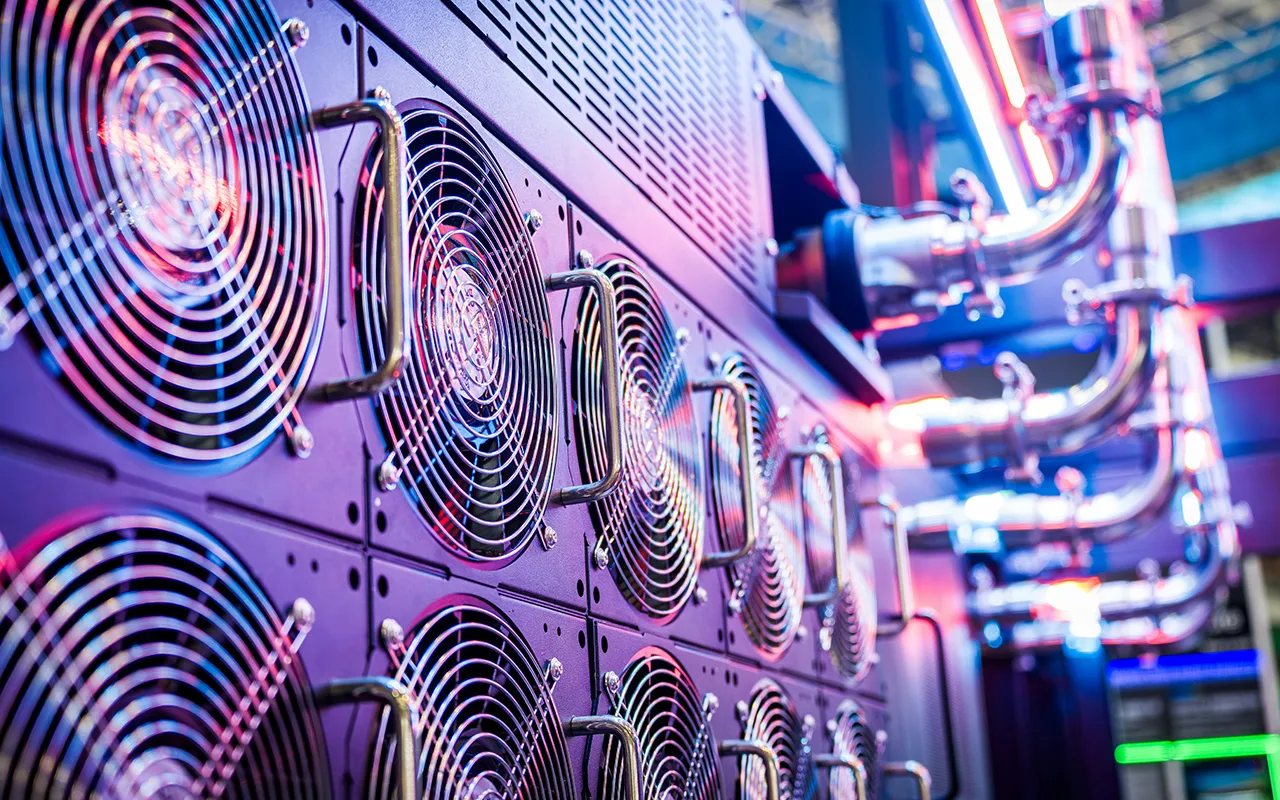
The roughly 3x premium for AI-optimized construction, $20 million to $37 million-plus per MW versus $10 million to $13 million for a standard build, comes down to three specific engineering changes, not a general “AI tax.” First, liquid cooling systems (manifolds, coolant distribution units, piping) cost significantly more to design and install than traditional CRAC/CRAH air cooling, and they're increasingly necessary because GPU racks generate far more heat per square foot than legacy server racks. Second, higher-voltage power distribution is required to feed that same GPU density without impractically thick cabling runs. Third, denser rack layouts mean more electrical and mechanical capacity has to be packed into the same physical footprint, which raises the engineering complexity and therefore the cost of every system that touches that footprint. For the demand-side story — why hyperscalers are willing to pay that premium at all — see why AI is fueling the data center boom.
Cost Per MW vs. Cost Per Rack: Two Ways to Measure
Cost per megawatt is the industry-standard benchmark, but it can be misleading when comparing facilities with very different rack densities. A facility built for traditional enterprise workloads might run 5–10 kW per rack, while an AI-optimized facility can exceed 50–100 kW per rack. That means an AI-optimized facility packs far more compute and far more capital cost into the same number of racks. When comparing two projects, cost per MW tells you the power-delivery cost; cost per rack (or cost per unit of compute) tells you what you're actually getting for it. Both numbers matter, and quoting only one can make an AI-optimized facility look more expensive than it is on a per-unit-of-compute basis.
What Drives Regional Cost Variance
Construction cost per MW isn't uniform across markets, and three factors explain most of the variance: land and labor costs (markets with tight construction labor markets and high land prices push costs up regardless of facility type), power availability (markets requiring new substation build-out or long utility interconnection queues add both cost and schedule risk), and permitting speed (jurisdictions with faster, more predictable permitting reduce carrying costs during construction). None of these factors are unique to data centers, but they compound quickly at data center scale, where a delay of even a few months on a project representing hundreds of millions of dollars in capital has a real financing cost.
Build vs. Lease: Comparing the Economics
Not every organization needs to build. Leasing colocation space converts a large capital expenditure into a recurring operating expense, shifting shell, power, and cooling costs to the provider in exchange for a monthly or annual lease rate. Building owned capacity (enterprise or hyperscale) requires the full capital outlay described above but gives complete control over design, security, and long-term capacity planning. As a rough framework: organizations with unpredictable or shorter-term capacity needs, or without in-house facilities expertise, tend to favor colocation; organizations with sustained, large-scale, long-term capacity needs, and the capital to fund it, tend to favor building. AssetPulse's guide to the types of data centers goes deeper on how ownership model affects operations beyond just cost.
Why Construction Cost Strengthens the Case for Asset Tracking
Whichever path an organization takes, the number that matters operationally comes after the ribbon-cutting: every dollar of that $10 million-plus per megawatt eventually becomes a physical, depreciable asset sitting in a rack. In a standard build, that's already significant capital to account for; in an AI-optimized build running $20–37 million-plus per MW, it's capital dense enough that losing track of even a small percentage of it is a meaningful balance-sheet problem, not just an operational inconvenience. AssetPulse's complete guide to data center asset tracking covers what to track and how. For the specific line items that capital turns into, see the complete list of data center assets to track. And if you're also budgeting the tracking system itself, see how much an RFID system costs.