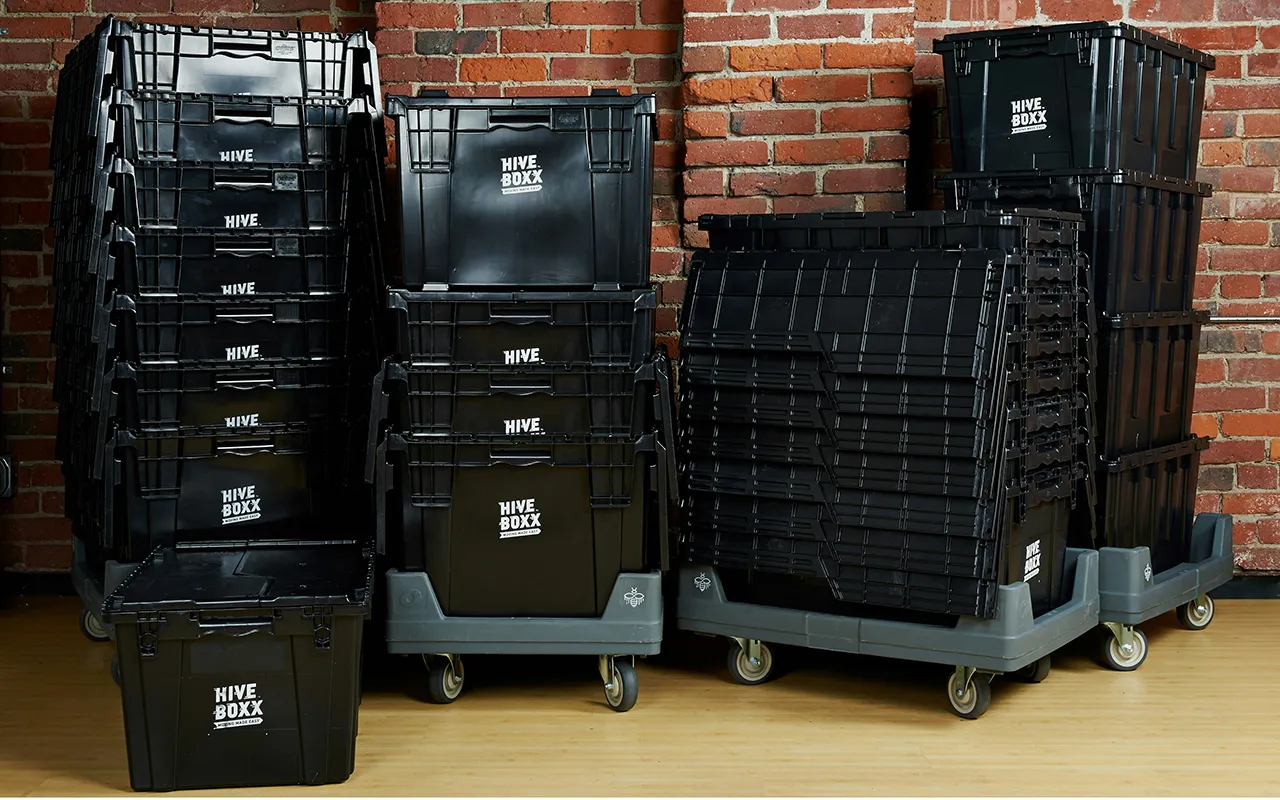
RFID-enabled returnable container management gives manufacturers real-time visibility into every container moving across production facilities, supplier locations, and logistics handoffs. By maintaining a continuous location record without manual scanning or paperwork, manufacturers reduce container losses, cut replacement costs, and eliminate supply shortages caused by containers that have simply gone missing from the system.
Returnable containers are a significant asset in automotive and industrial supply chains. Racks, pallets, totes, dunnage, and specialty carriers designed for specific component families can cost hundreds or thousands of dollars per unit. When they're managed well, they're a cost-effective alternative to single-use packaging. When they're managed poorly, the losses compound quietly until replacement costs or container shortages make the problem impossible to ignore.
Most manufacturers know they lose containers. Few have accurate data on where or when. RFID returnable container management provides real-time visibility into container location, movement, utilization, and dwell time throughout the supply chain, helping manufacturers reduce losses before they disrupt operations.
Why Returnable Container Management Is Harder Than It Looks
Returnable container programs sound simple: suppliers load components into containers, ship them to the plant, the plant empties and returns them, and the cycle repeats. In practice, the cycle involves multiple handoffs, multiple facilities, transit periods, and a lot of points where a container can be misrouted, set aside, or quietly absorbed into another operation.
Container losses happen at predictable failure points. Containers left in a staging area during a layout change. Containers used as temporary storage for something other than their intended purpose. Containers loaded on the wrong return truck because nobody checked the route. Containers that reached a supplier and were never logged in, then used for an outbound shipment to a different customer.
Manual tracking—spreadsheets, paper logs, occasional physical counts—catches some of this. But by the time a discrepancy appears in the record, the container has often been missing for weeks, and locating it means making phone calls across a network of suppliers and logistics providers.
How RFID Enables Returnable Container Management
RFID tags attached to containers capture location data at every point in the network where a reader is installed: dock doors at the plant, receiving areas at supplier facilities, cross-dock points in the logistics network. Each read creates a timestamped record that updates the container's location in the tracking system.
This happens without operators doing anything beyond their normal workflow. When a truck arrives at a plant dock door, the RFID portal reads every tagged container on the load as it passes through. The system updates all of them simultaneously and reconciles the delivery against the expected shipment in seconds.
Dock Door Portals: The Most Impactful Read Point
For most returnable container programs, dock door RFID portals deliver the highest concentration of tracking value. Every container entering or leaving the facility passes through a portal. The system knows what left, what arrived, and what was expected at each transaction.
If a container should have come back on the Tuesday return truck and it didn't, the system flags it the same day. That early alert is the difference between making a single phone call to locate a container and conducting a facility-wide search three weeks later.
Supplier-Side Tracking for Full Loop Visibility
The most common gap in returnable container programs is visibility at supplier locations. If the supplier doesn't have reader infrastructure, the manufacturer loses sight of the container the moment it leaves their dock. It reappears when the next return shipment arrives—if it arrives.
Extending RFID reader coverage to key supplier facilities closes that loop. With supplier-side reads, the platform knows when a container was received, how long it sat before being loaded for return, and whether the return shipment actually departed. Suppliers with longer-than-expected dwell times get flagged before the shortage reaches the plant.
What Does Container Loss Actually Cost?
The direct cost of container loss is the replacement cost of the container itself. For specialty racks or custom-fabricated dunnage, that can be substantial. But the indirect costs often exceed the asset cost.
Container shortages stop production. When a supplier can't ship because they don't have empties, and the manufacturer's line goes down because parts aren't arriving, the cost of a few missing containers multiplies quickly. Short-cycle emergency shipments using disposable packaging, expedited freight, and premium labor to repackage in-line are all downstream consequences of a container pool that's smaller than it should be.
Most manufacturers can identify these costs in hindsight. RFID-driven returnable container management makes them preventable.
Program Visibility and Supplier Accountability
Beyond loss prevention, RFID container data supports program management at a level that manual tracking can't. Container utilization reports show how long containers spend at each location in the network. Dwell time analysis at specific suppliers identifies whether containers are being turned quickly or accumulating between shipments.
This data creates objective performance baselines for returnable container programs. When a supplier has a consistently long container dwell time, the program manager has data to support a conversation rather than an anecdote. When a logistics provider has a pattern of delivery discrepancies, the dock door read records provide documentation.
Scaling RFID Across a Multi-Supplier Container Network
Deploying RFID in a returnable container program typically starts with the highest-volume facilities and expands as the program matures. The manufacturing plant's dock doors are the most common starting point—maximum read volume, centralized infrastructure, and immediate visibility into what's returning from the supplier network.
Expanding to supplier locations adds the inbound leg of the loop. For high-volume or high-value container types, the investment in supplier-side infrastructure pays off quickly in reduced shortage incidents.
Cloud-based platforms allow all stakeholders—plant logistics, supplier quality, transportation providers—to access the same container visibility data, reducing the coordination overhead that plagues manual programs.
Benefits of RFID Returnable Container Management
RFID-enabled returnable container management helps manufacturers improve visibility, reduce operational costs, and optimize container utilization throughout the supply chain. Key benefits include:
- Reduces container losses
- Improves supplier accountability
- Prevents production delays
- Minimizes replacement costs
- Automatically tracks racks, totes, pallets, and carriers
- Improves container utilization
- Supports multi-supplier visibility
- Provides real-time container visibility across plants and suppliers
About AssetPulse
AssetPulse provides RFID-enabled returnable container management for manufacturers operating across plants, suppliers, warehouses, and logistics partners. The platform captures every container movement automatically through RFID portals, flags containers that haven't returned on schedule the same day rather than weeks later, and gives plant logistics, supplier quality, and transportation teams shared visibility into the same container data. For manufacturers managing container programs across multiple suppliers, AssetPulse turns scattered dwell-time and shortage patterns into objective data that supports real conversations with underperforming partners.